Journal / sensitivity
How to whiten sensitive teeth without the zing
The sharp, cold jolt an hour after a whitening strip has a name among dentists: zingers. If that is why you stopped whitening, nothing was wrong with your teeth. The product was doing exactly what peroxide does.
Where the pain comes from
Enamel is porous. Under it is dentine, which is full of microscopic tubes that run to the nerve. Peroxide breaks down into free radicals, and those radicals travel through the enamel, down the tubes, and irritate the pulp. The higher the concentration and the longer the contact, the more they travel. That is the entire mechanism, and it is why the pain tracks so closely with how "strong" a product claims to be.
Four changes that stop it
1. Change the molecule
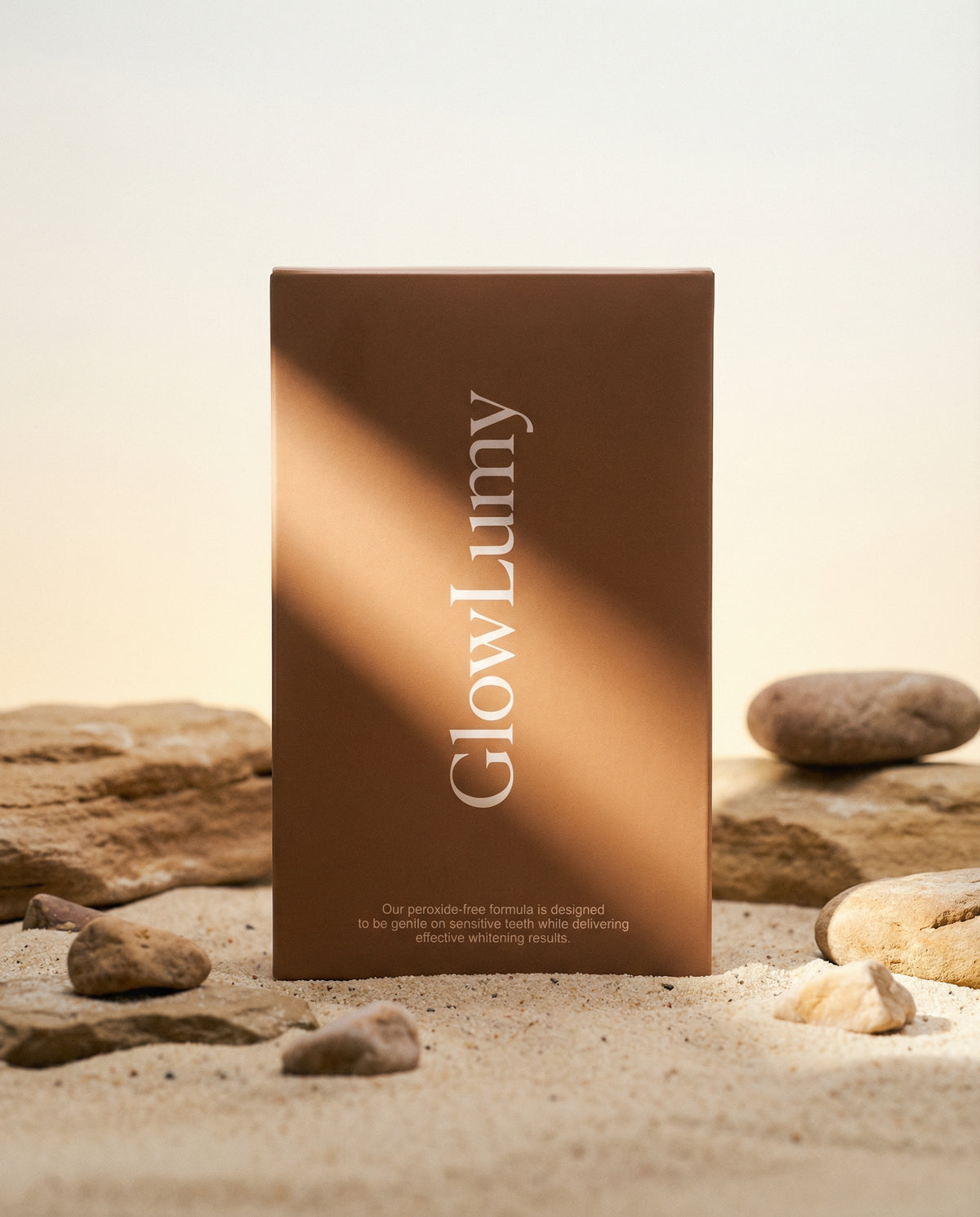
PAP oxidises stains without releasing free radicals, so there is nothing to travel down the tubes. In studies on extracted teeth it produced the same colour change as peroxide without changing the enamel surface. For most people this one change is the whole answer. Our PAP vs peroxide article goes into the chemistry.
2. Keep sessions short and regular
Thirty minutes a day for fourteen days beats two hours twice. Stains lift in layers, and the tooth gets time to rehydrate between sessions. Dehydrated enamel looks whiter for an hour and feels worse for a day.
3. Do not brush right before
Brushing opens the surface. Rinse, apply the strips, then brush afterwards with a gentle paste.
4. Skip the acid
Citrus, fizzy drinks and vinegar soften enamel for about half an hour. Whitening on top of that, with any active, is asking for trouble. Give it an hour.
A sensitive-teeth routine
- Morning: Active, two minutes, soft brush.
- Afternoon: strips for thirty minutes, on clean, dry teeth, no acid for the hour before.
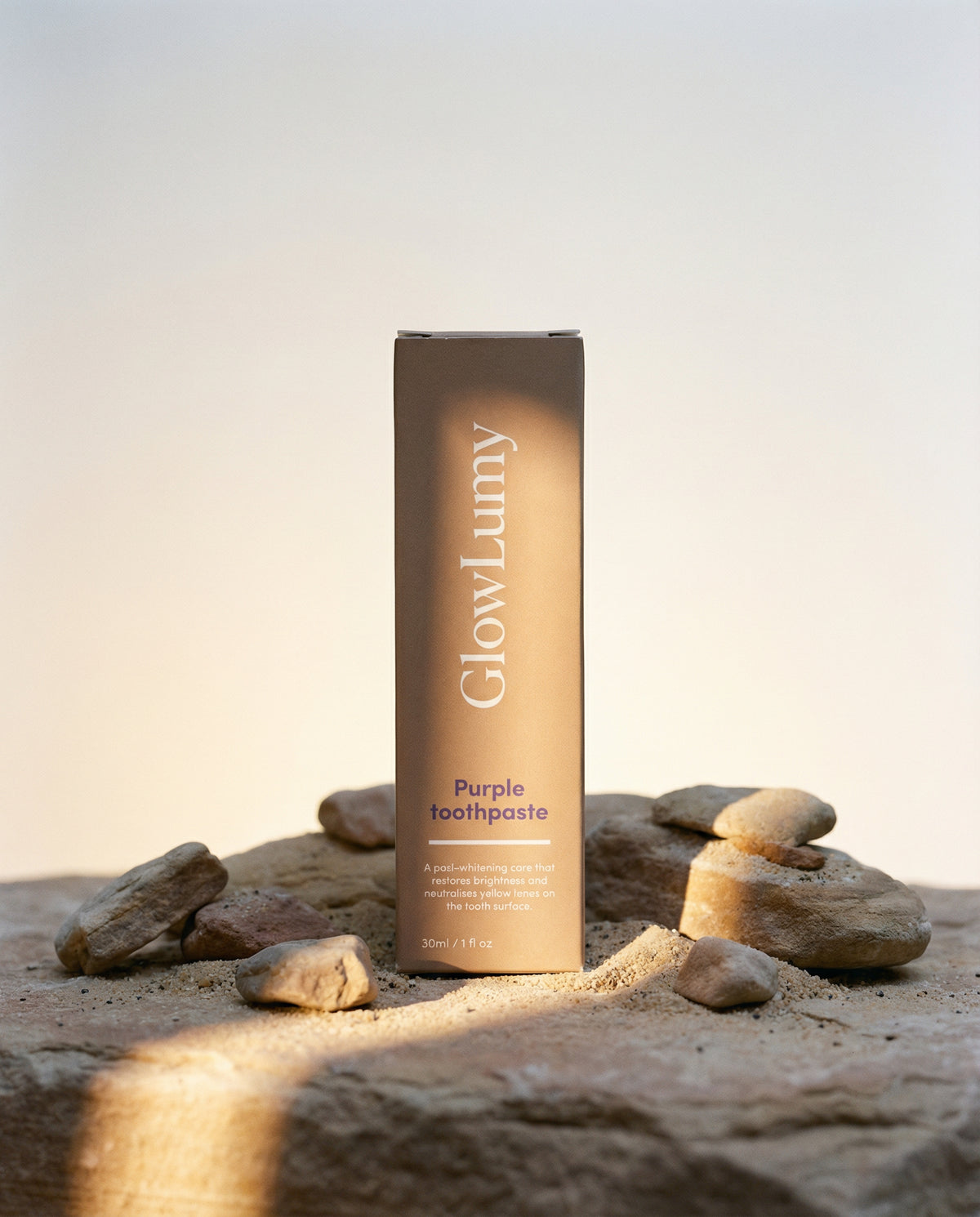
- Evening: Purple, two minutes, light rinse.
- Two weeks on, then daily toothpaste only until the next course.
When to see a dentist instead
Sensitivity that is there every day, not only after whitening, means something else: a receding gum, a crack, a worn spot. Whitening will not cause it but will make it louder. Fix the cause first.
Questions people ask
Why does whitening make teeth sensitive?
Peroxide releases free radicals that pass through enamel into the dentine tubules and irritate the nerve. The sharp, short pain usually fades within a day or two but returns with the next session.
Can people with sensitive teeth whiten at all?
Usually yes, with a peroxide-free active such as PAP and shorter, consistent sessions. People with exposed roots, cracked teeth or active decay should see a dentist first.
Glowlumy products are cosmetics. They lighten stains on natural enamel and are not a treatment for any dental condition. If you have pain, receding gums or dental work you are unsure about, ask your dentist first.